head & Neck Cancer treatment
Expert Surgical Oncology | Precision Treatment | Compassionate Care.
Understanding Head & Neck Cancers
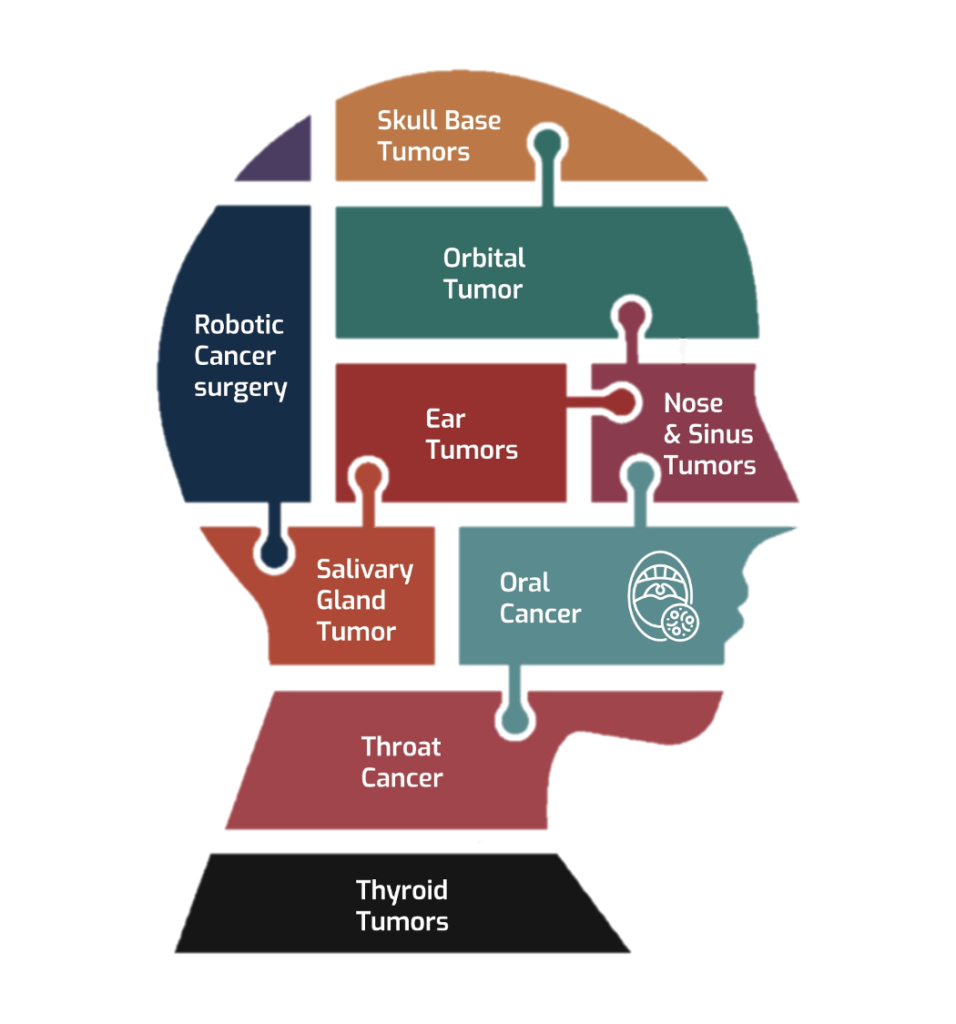
Head & Neck Cancer is not a single disease, but a group of cancers that arise in the mouth, tongue, throat, voice box (larynx), thyroid gland, salivary glands, nose, paranasal sinuses, and skull base. Although these cancers occur in different locations, they share common principles of diagnosis and treatment while requiring highly specialized surgical expertise.
Early diagnosis is one of the most important factors influencing successful treatment. Persistent mouth ulcers, a painless neck swelling, difficulty in swallowing, persistent hoarseness of voice, unexplained bleeding, or a non-healing white or red patch inside the mouth should never be ignored. Timely evaluation by a Head & Neck Cancer Specialist allows treatment to begin before the disease becomes more advanced.
Modern management of head and neck cancer extends far beyond removing the tumour. Every patient benefits from an individualized treatment plan developed after careful clinical examination, advanced imaging, tissue diagnosis, and multidisciplinary discussion. The goal is not only to achieve the best cancer control but also to preserve speech, swallowing, appearance, and overall quality of life.
With advances in minimally invasive surgery, robotic surgery, reconstructive microsurgery, precision radiotherapy, targeted therapy, and immunotherapy, treatment has become more personalized than ever before. Choosing the right treatment at the right time can significantly improve both survival and functional outcomes.
Conditions We Treat
Comprehensive diagnosis and personalized treatment for the complete spectrum of head and neck cancers—from early-stage disease to the most complex recurrent tumours.
Oral Cancer
Early diagnosis and expert surgical management significantly improve cure rates while preserving speech, swallowing, and appearance.
Learn More →
Tongue Cancer
Precision surgery focused on complete tumour removal with maximum preservation of speech, swallowing, and quality of life.
Learn More →
Throat Cancer
Comprehensive care for cancers of the oropharynx, hypopharynx, and larynx using individualized multidisciplinary treatment.
Learn More →
Voice Box (Laryngeal) Cancer
Advanced treatment aimed at preserving voice whenever possible while maintaining excellent cancer control.
Learn More →
Thyroid Cancer
Personalized treatment ranging from minimally invasive surgery to advanced management of complex thyroid cancers
Learn More →
Salivary Gland Tumours
Expert diagnosis and surgery for both benign and malignant salivary gland tumours using nerve-preserving techniques.
Learn More →
Skull Base Tumours
Complex skull base surgery performed with advanced endoscopic and multidisciplinary approaches for optimal outcomes
Learn More →
Recurrent Head & Neck Cancers
Specialized evaluation and salvage treatment for recurrent cancers where experience makes a meaningful difference.
Learn More →
Recognising the Warning Signs and Symptoms
Head & Neck Cancers often present with subtle symptoms that may be mistaken for common infections or minor oral problems. While many of these symptoms can occur due to non-cancerous conditions, those that persist for more than two to three weeks should always be evaluated by a Head & Neck Cancer Specialist.
Early diagnosis significantly improves the chances of successful treatment while preserving important functions such as speech, swallowing, breathing, and appearance.

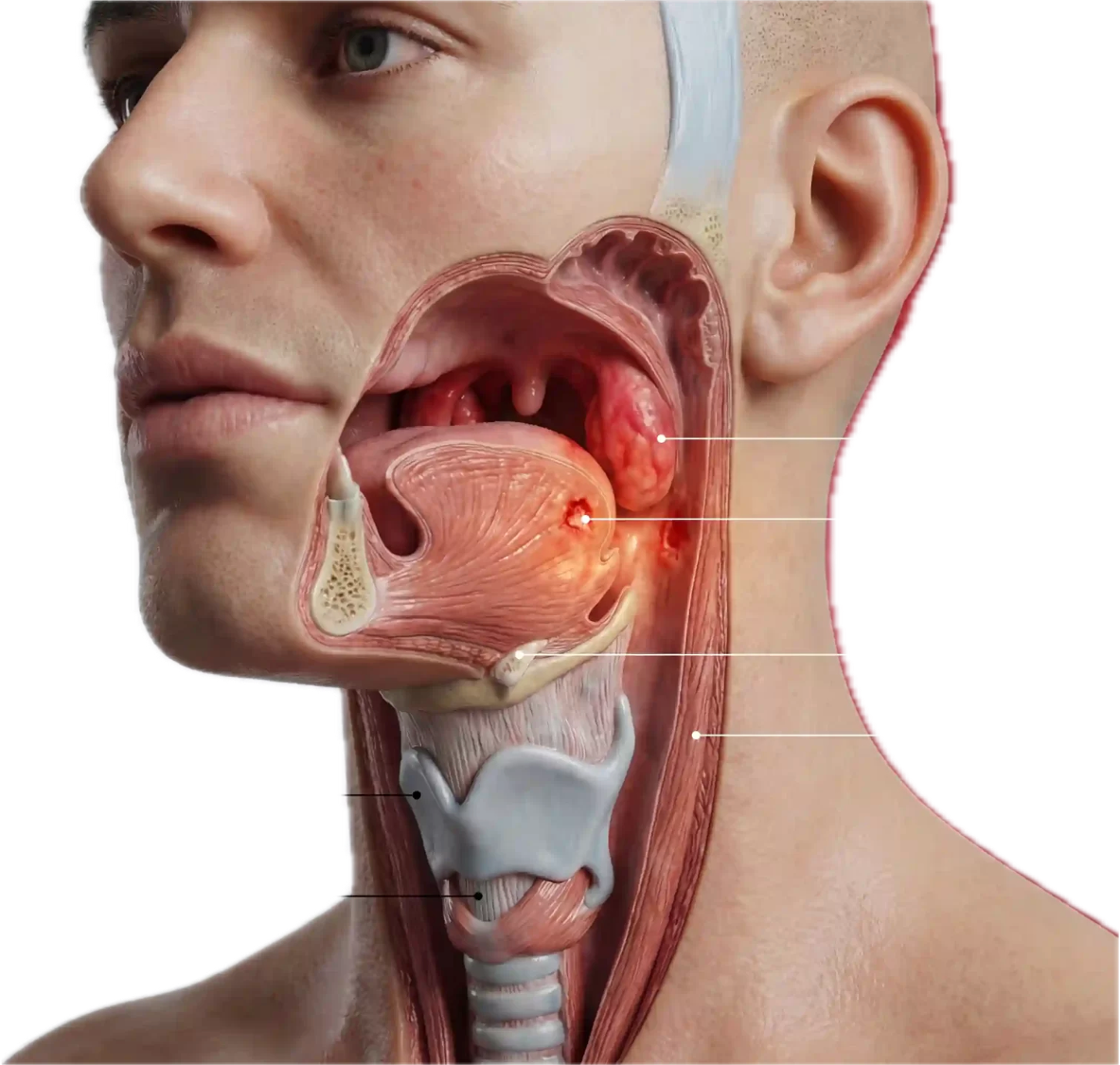
Any symptom lasting more than 2–3 weeks needs evaluation by a Head & Neck Cancer Specialist
How We Diagnose Head & Neck Cancer
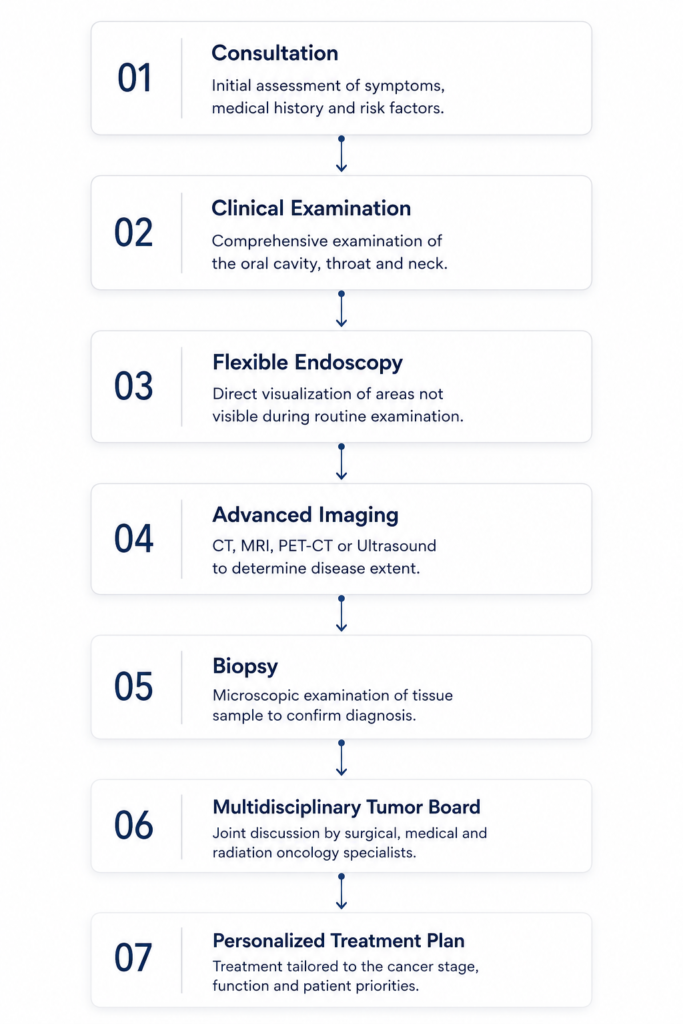
Every patient undergoes a systematic evaluation to accurately diagnose the disease and develop a personalized treatment plan.
TREATMENT OPTIONS FOR HEAD & NECK CANCERS
Head and neck cancer treatment is highly individualized. The most appropriate treatment depends on the type of cancer, its stage, location, overall health, functional requirements, and patient preferences. Every patient is carefully evaluated through clinical examination, imaging, biopsy, and multidisciplinary discussion before a personalized treatment plan is developed.
Modern treatment aims not only to eliminate cancer but also to preserve speech, swallowing, breathing, appearance, and overall quality of life. Depending on the diagnosis, treatment may involve one or more of the following approaches.
Surgery
Surgery remains the primary treatment for many head and neck cancers and offers the best chance of cure in appropriately selected patients. Depending on the tumour location and extent, surgery may be performed using conventional open techniques, minimally invasive endoscopic surgery, transoral approaches, robotic surgery, or scarless thyroid surgery. The objective is complete tumour removal while preserving vital structures and maintaining the best possible functional and cosmetic outcomes.
Radiation Therapy
Radiation therapy uses high-energy beams to precisely destroy cancer cells while preserving surrounding healthy tissues. It may be used as the primary treatment, after surgery to reduce the risk of recurrence, or in combination with chemotherapy for advanced cancers. Modern techniques such as IMRT and IGRT improve treatment precision and minimize side effects.
Chemotherapy, Targeted Therapy & Immunotherapy
Drug-based treatments play an important role in selected head and neck cancers. Chemotherapy is commonly combined with radiation therapy or used before or after surgery in advanced disease. Targeted therapy acts on specific cancer pathways, while immunotherapy enhances the body’s immune system to recognize and fight cancer. These treatments are carefully selected based on tumour characteristics and individual patient factors.
Reconstructive Surgery & Functional Rehabilitation
Successful treatment extends beyond cancer removal. Advanced reconstructive surgery using local or free tissue transfer helps restore appearance, speech, swallowing, and facial function after major cancer surgery. Rehabilitation through speech therapy, swallowing therapy, nutritional support, physiotherapy, and psychological counselling is equally important in helping patients regain confidence and quality of life.
Multidisciplinary Cancer Care
The best outcomes are achieved through a multidisciplinary approach. Surgeons, radiation oncologists, medical oncologists, radiologists, pathologists, reconstructive surgeons, speech and swallowing therapists, nutritionists, physiotherapists, and nursing specialists work together to formulate a comprehensive treatment strategy tailored to every patient.
Head and neck cancer treatment is never one-size-fits-all. The best treatment depends on the type of cancer, its stage, location, overall health, and the patient’s functional needs. Every treatment plan is carefully personalized after comprehensive evaluation and multidisciplinary discussion to achieve the best cancer control while preserving speech, swallowing, breathing, and appearance whenever possible.
Restoring Function. Rebuilding Lives.
Treatment is only one part of the cancer journey. Recovery continues long after surgery, radiation, or chemotherapy have been completed. Regular follow-up visits, nutritional support, speech and swallowing rehabilitation, physiotherapy, dental care, and psychological well-being all play an important role in helping patients return to a healthy and fulfilling life.
Successful treatment is measured not only by curing cancer, but also by preserving speech, swallowing, appearance, breathing, and overall quality of life. Rehabilitation begins from the very first day of treatment planning and continues throughout recovery, helping patients regain confidence and return to their normal lives.
Speech & Voice Rehabilitation
Communication is central to everyday life. Following treatment, specialized speech and voice rehabilitation helps patients improve speech clarity, restore communication, and adapt to changes caused by surgery or radiation therapy.
Swallowing & Nutritional Rehabilitation
Difficulty swallowing is a common concern after treatment for head and neck cancer. Early swallowing therapy, nutritional counselling, and individualized dietary support help patients recover safely while maintaining adequate nutrition and improving quality of life.
Functional Reconstruction
Modern reconstructive surgery restores both form and function following cancer removal. Using advanced reconstructive techniques, the aim is to preserve facial appearance, oral competence, swallowing, speech, and overall functional outcomes whenever possible.
Physical Rehabilitation
Targeted physiotherapy and rehabilitation programmes help improve jaw opening, shoulder movement, neck mobility, posture, and overall physical recovery after treatment, enabling patients to regain independence in their daily activities.
Survivorship & Long-Term Follow-up
Recovery continues long after treatment is completed. Regular follow-up allows early detection of recurrence, management of treatment-related effects, and ongoing guidance to support long-term health and cancer survivorship.
Emotional Well-being & Support
A diagnosis of cancer affects both patients and their families. Compassionate counselling, emotional support, patient education, and coordinated multidisciplinary care help patients navigate every stage of their recovery with confidence and hope.
Frequently Asked Questions (FAQs)
1. What is Head & Neck Cancer?
Head and neck cancer refers to a group of cancers that develop in the mouth, tongue, throat, voice box (larynx), thyroid gland, salivary glands, nose, paranasal sinuses, and related structures. Early diagnosis greatly improves treatment outcomes.
2. What are the early warning signs of Head & Neck Cancer?
Common symptoms include:
• A mouth ulcer that does not heal
• White or red patches inside the mouth
• Lump in the neck
• Difficulty swallowing
• Persistent hoarseness or voice change
• Bleeding from the mouth
• Persistent ear pain
Any symptom lasting more than 2–3 weeks should be evaluated by a Head & Neck Cancer Specialist.
3. Is every mouth ulcer cancer?
No.
Most mouth ulcers heal within one to two weeks. However, an ulcer that persists for more than 2–3 weeks, especially if it is painless, should be examined promptly.
4. Does a neck lump always mean cancer?
Not always.
Many neck swellings are caused by infections or benign conditions. However, any persistent neck lump in an adult requires proper evaluation to rule out cancer.
5. Who is at higher risk of developing Head & Neck Cancer?
Risk factors include:
• Tobacco chewing
• Smoking
• Alcohol consumption
• HPV infection
• Poor oral hygiene
• Long-term sun exposure (lip cancers)
• Previous head and neck cancers
• Certain occupational exposures
Some patients develop head and neck cancer even without obvious risk factors.
6. How is Head & Neck Cancer diagnosed?
Diagnosis usually involves:
• Clinical examination
• Flexible endoscopy
• Imaging (CT, MRI or PET-CT)
• Biopsy
• Multidisciplinary treatment planning
7. Is surgery always required?
Not always.
Treatment depends on the cancer type, stage, and location. Some patients require surgery, while others benefit from radiation therapy, chemotherapy, targeted therapy, immunotherapy, or a combination of treatments.
8. Can Head & Neck Cancer be cured?
Yes.
Many head and neck cancers are curable, particularly when diagnosed early. Even advanced cancers can often be treated effectively using modern multidisciplinary care.
9. Will I lose my speech or ability to swallow?
Not necessarily.
Modern treatment aims to preserve speech, swallowing, breathing, and appearance whenever possible. Rehabilitation and reconstructive techniques help many patients regain normal function.
10. What happens after treatment?
Recovery continues after treatment is completed. Regular follow-up, nutritional guidance, speech and swallowing rehabilitation, physiotherapy, dental care, and psychological support all contribute to long-term recovery and quality of life.
11. How often should I follow up after treatment?
Follow-up schedules vary for each patient but are most frequent during the first two years after treatment. Regular reviews help detect recurrence early and manage treatment-related side effects.
12. When should I consult a Head & Neck Cancer Specialist?
You should seek specialist evaluation if you have:
• A mouth ulcer lasting more than 2–3 weeks
• A persistent neck lump
• Difficulty swallowing
• Persistent hoarseness
• Unexplained oral bleeding
• White or red patches inside the mouth
• Persistent ear pain without an obvious ear problem
Early consultation can make a significant difference in treatment success.
Prevention & Early Detection of Head & Neck Cancers
Although not every head and neck cancer can be prevented, many cases are linked to avoidable risk factors. Healthy lifestyle choices, regular oral examinations, and early recognition of warning signs can significantly reduce the risk of developing these cancers or allow them to be detected at an earlier, more treatable stage.
Avoid Tobacco in All Forms
Tobacco remains the leading preventable cause of head and neck cancer. Smoking cigarettes, bidis, cigars, as well as chewing tobacco, gutkha, paan with tobacco, and betel nut (supari), substantially increase the risk of cancers of the mouth, throat, voice box, and other head and neck regions. Quitting tobacco at any stage reduces future cancer risk and improves overall health.
Avoid Alcohol Consumption
Alcohol is an established risk factor for head and neck cancer. The risk increases substantially when alcohol is combined with tobacco use. Avoiding alcohol, particularly in combination with tobacco, can significantly reduce the risk of developing head and neck cancers.
HPV Infection Prevention
Certain throat cancers, particularly cancers of the oropharynx, are associated with Human Papillomavirus (HPV) infection. HPV vaccination, where appropriate, together with increased awareness, can help reduce the risk of HPV-related cancers.
Maintain Good Oral Health
Good oral hygiene, regular dental check-ups, and prompt evaluation of persistent mouth ulcers, white or red patches, or any unusual changes inside the mouth help detect problems early. Routine dental examinations often play an important role in identifying suspicious lesions.
Adopt a Healthy Lifestyle
A balanced diet rich in fruits and vegetables, regular physical activity, maintaining a healthy body weight, and protecting the lips from excessive sun exposure all contribute to reducing the overall risk of cancer.
Seek Early Medical Advice
Watch for early signs and symptoms of head and neck cancers. Many people delay seeking medical attention, assuming their symptoms will resolve on their own or self treat themselves. Early consultation with a specialist ensures timely diagnosis, appropriate investigations, and prompt treatment when required. Acting early not only improves the chances of cure but also helps preserve speech, swallowing, appearance, and overall quality of life.
Because cancer treatment is not the end of your story—it is the beginning of a new chapter.
Your Journey Doesn’t End with Treatment
A diagnosis of head and neck cancer may change your life, but it does not define your future. With early diagnosis, personalized treatment, reconstructive surgery, rehabilitation, and regular follow-up, many patients successfully return to their families, careers, passions, and everyday life.
Successful treatment extends beyond removing cancer. Preserving speech, swallowing, appearance, confidence, and overall quality of life is equally important in helping patients return to a fulfilling life.
Whether you are experiencing symptoms, seeking answers, considering a second opinion, or beginning treatment, you do not have to face this journey alone..
Every patient deserves more than survival—they deserve their life back.