Laryngeal Cancer Treatment
Preserving Your Voice. Eliminating Your Cancer.
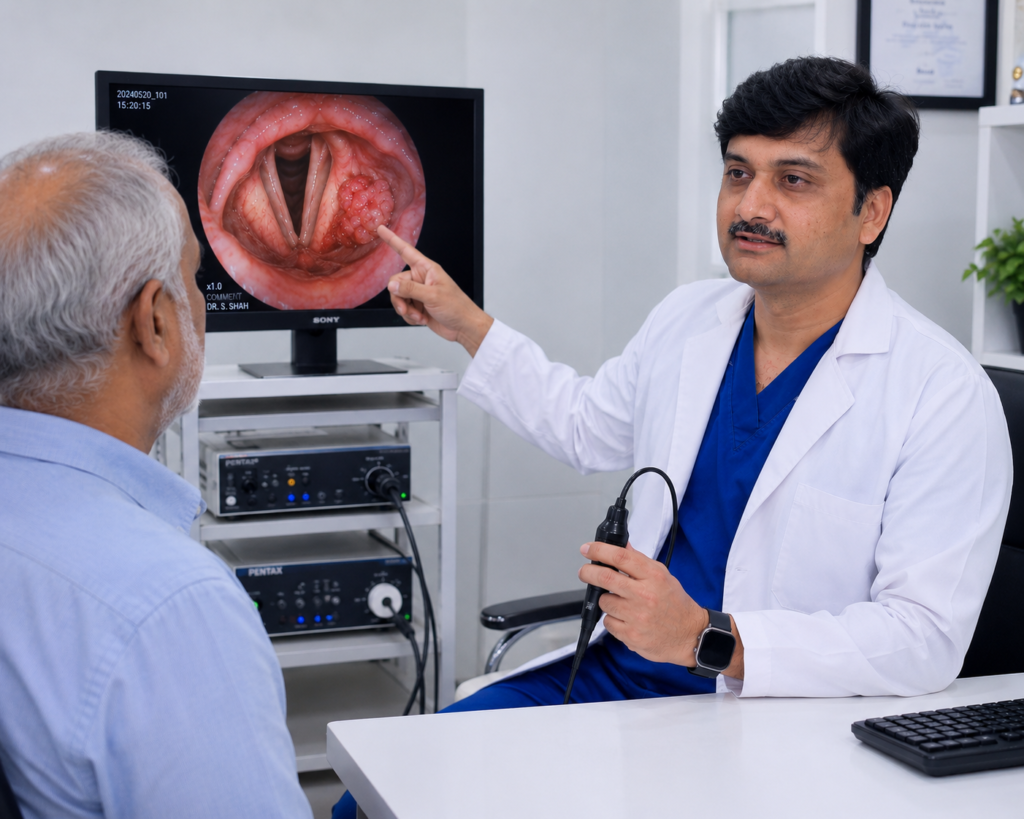
Most patients with laryngeal cancer can be treated while preserving their natural voice. The goal is always to cure the cancer while maintaining speech, swallowing and quality of life whenever safely possible.
Understanding Laryngeal Cancer
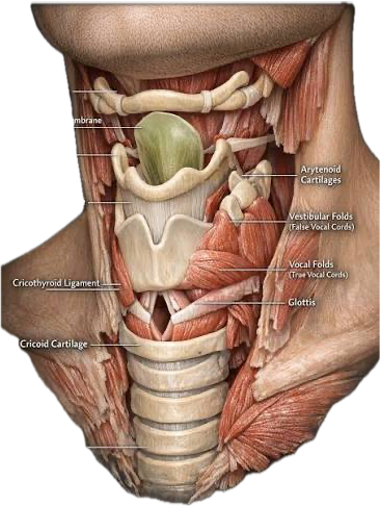
The larynx, commonly known as the voice box, is responsible for speaking, protecting the airway during swallowing and allowing normal breathing. Because these functions are so important, treatment decisions are often more complex than simply removing the tumour.
Over the past two decades, the treatment philosophy for laryngeal cancer has changed significantly. Today, preserving the voice box whenever oncologically appropriate has become the standard of care for many patients without compromising cure rates.
Symptoms That Should Never Be Ignored
Unlike many other head and neck cancers, laryngeal cancer often produces symptoms early, allowing diagnosis at an early stage.
Persistent hoarseness lasting more than three weeks is the single most important warning sign.
Other symptoms may include:
• Persistent change in voice
• Pain during swallowing
• Difficulty swallowing
• Persistent sore throat
• Lump in the neck
• Difficulty breathing or noisy breathing
• Blood in sputum (occasionally)
Early evaluation dramatically improves the chances of preserving the voice box.
How Is Laryngeal Cancer Diagnosed?
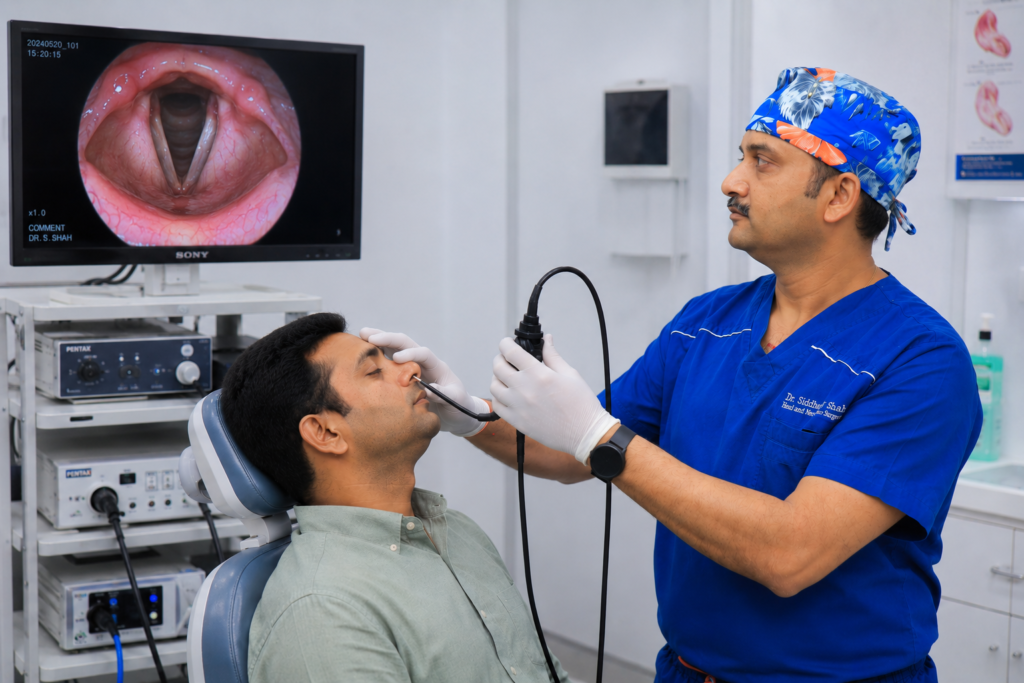
Evaluation begins with a detailed clinical examination followed by flexible video laryngoscopy, allowing direct visualization of the vocal cords and surrounding structures. The examination not only confirms the presence of a tumour but also assesses vocal cord mobility, which plays an important role in staging and treatment planning.Biopsy establishes the diagnosis.
Contrast-enhanced CT scan, MRI or PET-CT may be recommended to determine the exact extent of disease and evaluate lymph node involvement or distant spread.
Every patient is individually discussed to determine the most appropriate treatment strategy based on tumour stage, voice preservation potential and overall health.
Organ Preservation – The Modern Treatment Philosophy
One of the greatest advances in head and neck oncology has been the ability to cure many laryngeal cancers without removing the voice box. For appropriately selected patients, radiation therapy alone or combined chemoradiation offers cure rates comparable to surgery while preserving natural speech, swallowing and breathing.
In few select cases, an initial 2-3 courses of chemotherapy (Neo Adjuvant Chemotherapy or NACT) is given in order to reduce the tumour burden so that further treatment (radiation or chemoradiation) can be more effective. Throughout treatment, the response is carefully monitored. If the cancer disappears completely, surgery may not be required at all.
In select cases wherein the tumour is very early and superficial, a more conservative surgical approach called Trans Oral Laser Microsurgery (TOLM) which eliminates cancer in a day care procedure can be advocated in place of a 6-7 week of radiation therapy with equivalent oncological outcomes.
“Today, nearly two-thirds of patients with laryngeal cancer can often preserve their voice box with carefully selected treatment.”
When Is Surgery Required?
Although many patients can successfully avoid surgery initially, surgery continues to play a critical role in selected situations.
Surgery may be recommended when:
• The tumour is detected at a very early stage and can be removed using minimally invasive techniques (TOLM).
• The cancer persists after radiation or chemoradiation (salvage laryngectomy).
• The cancer returns following previous treatment.
• The tumour is too advanced for successful organ preservation.
The decision is individualised, balancing cure with long-term voice and swallowing outcomes.
Surgical Treatment of Laryngeal Cancers
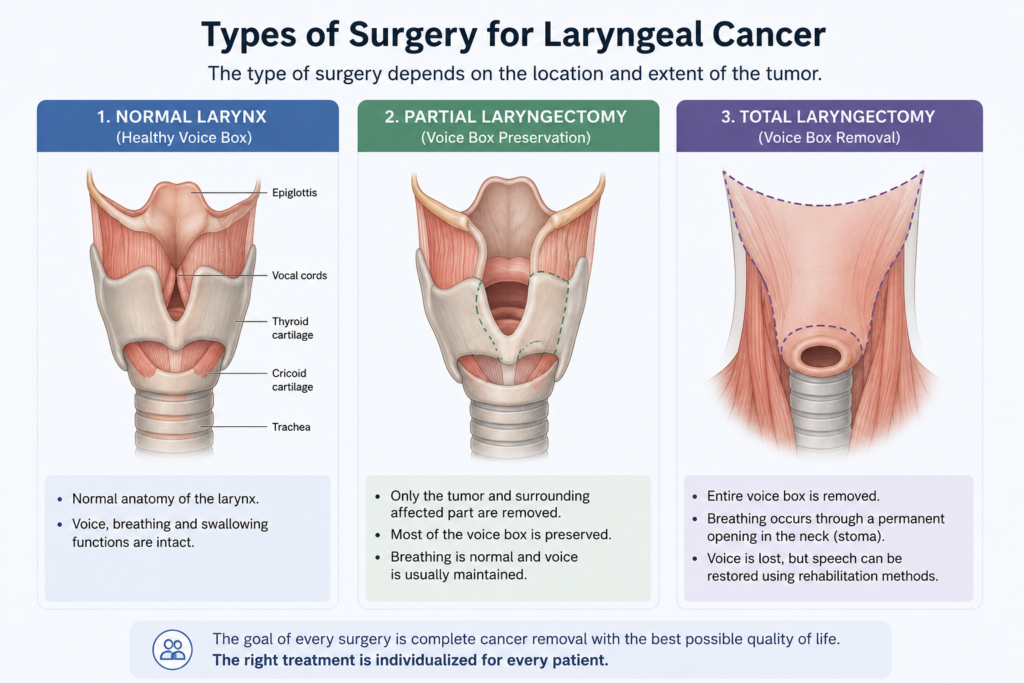
The type of surgery depends entirely on the tumour location and stage.
Early Laryngeal Cancer
Small cancers involving the vocal cords can often be treated using transoral laser microsurgery (TOLM), preserving normal speech and swallowing with excellent cure rates. Patients usually recover quickly and hospital stay is short.
Partial Laryngectomy
In selected patients, only the diseased portion of the larynx is removed while preserving the remaining voice box. This allows many patients to continue breathing normally without a permanent tracheostomy while retaining useful speech. Careful patient selection is essential for successful outcomes.
Total Laryngectomy
When the cancer extensively involves the larynx or organ preservation is unlikely to achieve cure, complete removal of the voice box may become necessary. Following total laryngectomy, breathing occurs permanently through a neck stoma.
Although the natural voice is lost, modern rehabilitation techniques allow patients to communicate effectively using tracheoesophageal voice prosthesis (TEP), electrolarynx or oesophageal speech.
Many patients return to independent daily life, professional work and social interaction after rehabilitation.
Rehabilitation After Treatment
Recovery extends far beyond completion of treatment. Voice rehabilitation, swallowing therapy, nutritional support and regular follow-up are essential components of successful laryngeal cancer care.
Speech therapists play an important role in helping patients regain confidence and communication following treatment.
Most patients gradually resume normal eating, daily activities and social interaction.
Frequently Asked Questions
Will I lose my voice?
Not necessarily. Many patients can be successfully treated while preserving the voice box. Even when total laryngectomy is required, modern voice rehabilitation allows meaningful speech.
Can laryngeal cancer be cured without surgery?
Yes. Radiation therapy or chemoradiation is the preferred treatment for many patients because it offers excellent cure rates while preserving the larynx.
Will I need a permanent tracheostomy?
Only some patients undergoing total laryngectomy require a permanent breathing opening in the neck. Most patients treated with radiation or partial surgery do not.
Can I speak after total laryngectomy?
Yes. Although the natural voice is lost, speech can often be restored using a voice prosthesis, electrolarynx or oesophageal speech with appropriate rehabilitation.
Will I be able to swallow normally?
Most patients gradually regain swallowing after treatment. Temporary swallowing difficulties are common during treatment, but long-term swallowing function is often good with rehabilitation.
Can the cancer come back?
Yes. Regular follow-up allows early detection of recurrence, when further treatment is often most successful.
Is smoking safe after treatment?
No. Continuing tobacco use significantly increases the risk of recurrence, second cancers and treatment-related complications. Complete cessation is strongly recommended.
Our Approach
Your voice is more than sound—it is your identity. Every treatment decision is carefully planned to achieve the highest chance of cure while preserving your ability to speak, swallow and live confidently whenever safely possible.