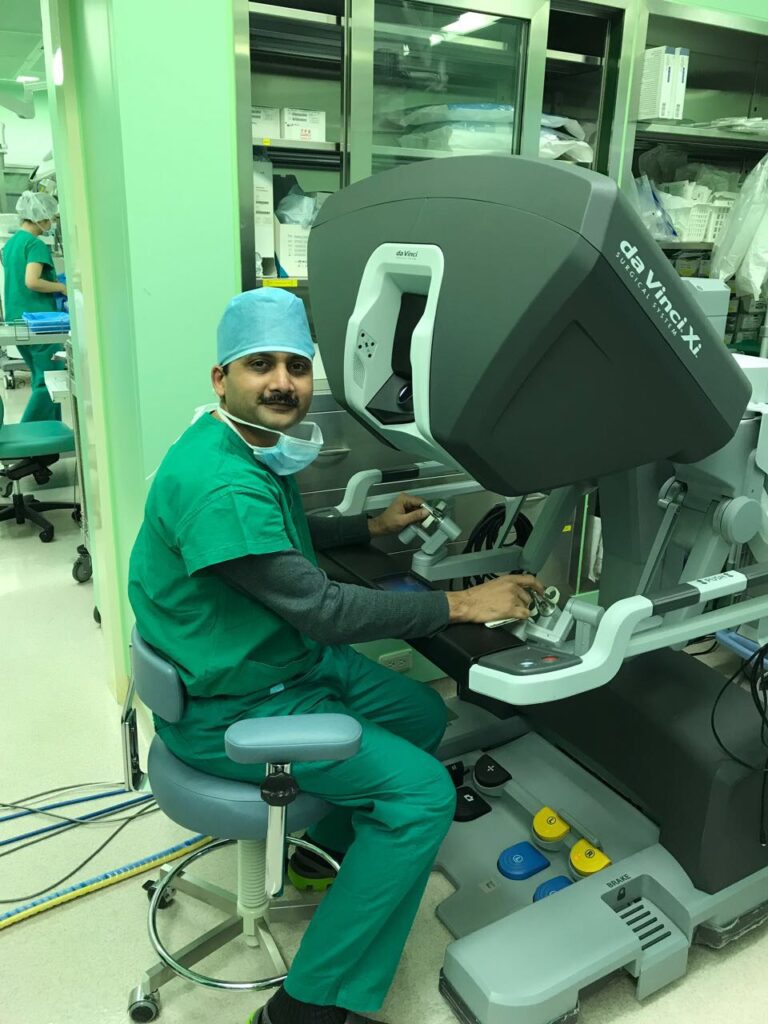
Robotic Head & Neck Surgery
Precision with Expertise
Advanced robotic technology allows selected head and neck tumours to be treated through the mouth without external facial incisions, offering excellent visualization, enhanced precision and faster recovery in carefully selected patients.
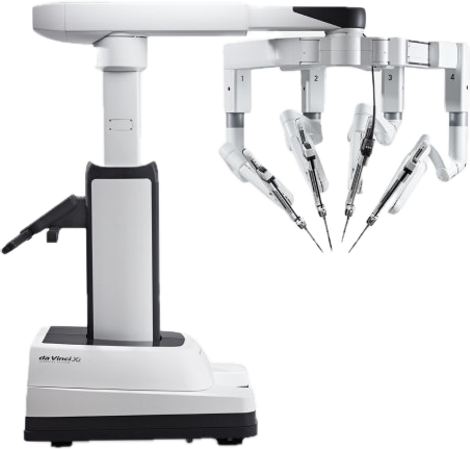
Robotic Head & Neck Surgery
Robotic head and neck surgery is an advanced minimally invasive surgical technique that allows selected tumours to be removed through the mouth without external facial or neck incisions. Using high-definition three-dimensional vision and wristed robotic instruments, the surgeon performs complex procedures with enhanced precision while preserving important structures whenever possible.
The robot never performs the surgery independently. Every movement of the robot is entirely controlled by the surgeon.
When Robotic Surgery can be Considered?
- ✓ Early cancers of the tonsil
- ✓ Base of tongue cancers
- ✓ Selected pharyngeal tumours
- ✓ Unknown primary cancers
- ✓ Selected thyroid procedures
Benefits of Robotic Surgery
✓ No visible facial incision
✓ Magnified 3D vision
✓ Greater surgical precision
✓ Faster swallowing recovery
✓ Reduced hospital stay
✓ Earlier return to normal activities
Technology is Powerful. Judgment is Priceless
Robotic surgery is not a replacement for surgical expertise—it is an advanced tool that enhances precision in carefully selected patients. Choosing the right operation remains far more important than choosing the latest technology. Every patient deserves an individualized treatment plan based on tumour biology, functional outcomes and long-term cure.
Robotic surgery is highly effective for selected patients, but it is not suitable for every head and neck cancer. The decision depends on the tumour location, stage, previous treatments, expected functional outcomes and overall treatment goals. During consultation, every patient is carefully evaluated to determine whether robotic surgery offers a genuine advantage over conventional approaches.
FAQ’s
1. What is robotic head and neck surgery?
Robotic head and neck surgery is a minimally invasive technique that allows selected tumours to be removed through the mouth using robotic instruments controlled entirely by the surgeon. It provides excellent visualization and precision while avoiding large external incisions in carefully selected patients.
2. Does the robot perform the surgery on its own?
No. The robot never makes decisions or performs surgery independently. Every movement of the robotic instruments is completely controlled by the operating surgeon. The robot is an advanced surgical tool that enhances precision—it does not replace surgical expertise.
3. Is robotic surgery suitable for every head and neck cancer?
No. Robotic surgery is beneficial only for selected tumours. The decision depends on the location, size and stage of the cancer, previous treatments and the expected functional outcome. During consultation, each patient is carefully evaluated to determine the most appropriate treatment approach.
4. What are the advantages of robotic surgery?
For suitable patients, robotic surgery may offer:
- No external facial incision
- High-definition 3D magnified vision
- Greater surgical precision
- Better preservation of surrounding structures
- Faster swallowing recovery
- Shorter hospital stay in selected cases
The greatest advantage, however, comes from choosing the right operation for the right patient.
5. Is robotic surgery as effective as conventional surgery?
Yes—when performed in appropriately selected patients, robotic surgery provides cancer control comparable to conventional surgery while offering potential functional benefits. The choice of treatment is always based on achieving the best oncological outcome rather than simply using newer technology.
6. Will I still need radiation or chemotherapy after robotic surgery?
Possibly. The need for additional treatment depends on the final biopsy report and the stage of the disease, not on whether robotic surgery was used. Some patients require surgery alone, while others may benefit from postoperative radiation or chemoradiation.
7. How do I know if I am a candidate for robotic surgery?
The only way to determine this is through a comprehensive evaluation, including clinical examination, endoscopy and imaging. Treatment recommendations are individualized to ensure that the chosen approach provides the best chance of cure while preserving speech, swallowing and overall quality of life.
Life After Robotic Surgery
Cancer treatment is more than removing a tumour—it is about restoring the life beyond it. Whether through robotic surgery or another approach, every recommendation is guided by one goal: achieving the best oncological outcome while helping you return to your Life 2.0—with confidence, function and hope.